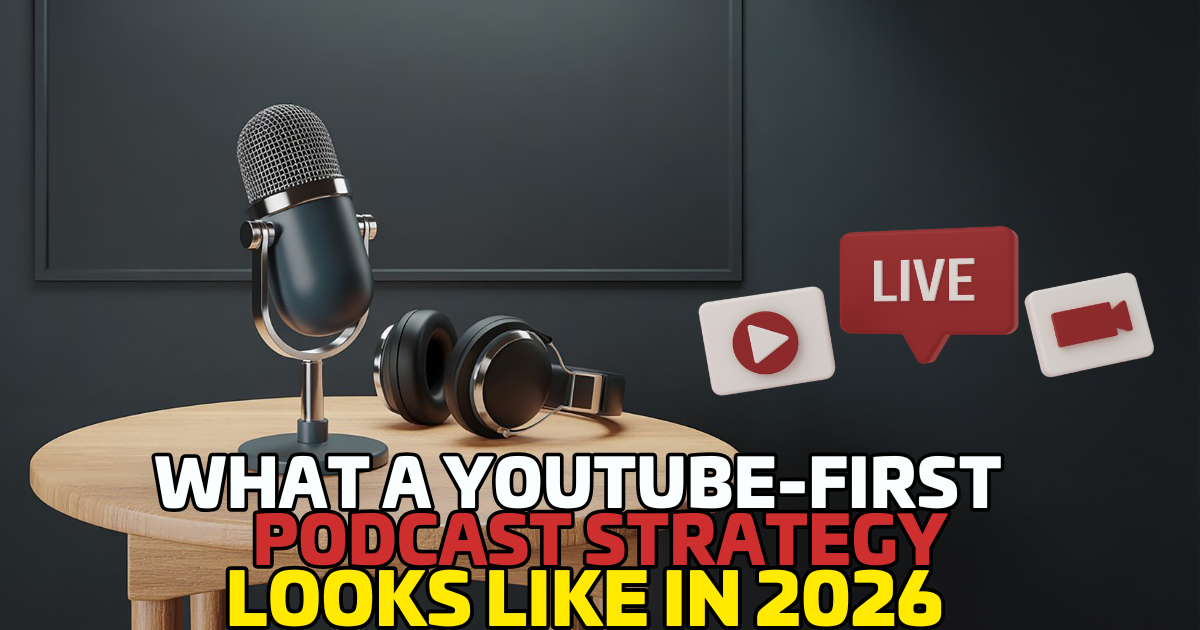
A YouTube-first podcast strategy treats video as the primary format and audio as a byproduct, because YouTube is now where discovery, search, and long-term watch time live. It means optimizing for the platform’s titles, thumbnails, and chapters, designing interviews to be visually engaging, and cutting every episode into shorts that feed the algorithm and pull viewers back to the full conversation. For guests, it means choosing shows with strong YouTube presence and showing up camera-ready. Here is what a YouTube-first podcast strategy looks like in practice in 2026.
Podcasting has changed direction.
In 2026, many of the fastest-growing shows were built for YouTube first, then distributed everywhere else. This shift is not about abandoning audio. It is about meeting audiences where discovery actually happens.
YouTube has become the primary search engine for expertise, interviews, and long-form learning. A YouTube-first podcast strategy positions your content for visibility before it ever reaches traditional audio platforms.
For founders, coaches, and experts, this approach transforms each episode into a long-term authority asset.
Why YouTube Is Now the Discovery Engine
Audio platforms are powerful for retention. YouTube is dominant for discovery.
YouTube’s recommendation engine surfaces interviews based on viewer behavior, search intent, and watch history. This allows new audiences to find you months or years after recording.
Unlike traditional podcast directories, YouTube also supports titles, thumbnails, chapters, and on-screen context that improves engagement.
When your podcast is structured for YouTube first, every episode becomes searchable, clickable, and shareable.
Designing Episodes for Visual Engagement
A YouTube-first strategy starts before recording.
Episodes are planned with visual presence in mind. This includes camera framing, lighting, eye contact, and background consistency that reflects your brand.
Visual clarity communicates professionalism instantly. Viewers evaluate credibility in seconds based on how the conversation looks as well as how it sounds.
Advanced execution also includes segmenting conversations into clear sections so viewers can navigate easily.
Structuring Content for Watch Time
Watch time is the metric that drives growth on YouTube.
High-performing podcasts use intentional pacing, clear topic transitions, and compelling openings. The first minute sets expectations and gives viewers a reason to stay.
Instead of long introductions that delay value, YouTube-first episodes lead with insight or a strong question.
Mid-episode shifts maintain attention. Strategic storytelling and practical examples prevent viewer drop-off.
Turning One Recording Into a Multi-Platform Engine
A YouTube-first podcast is not a single piece of content. It is the core asset that fuels everything else.
From one recording, advanced teams produce:
- Full YouTube episodes optimized for search
- Short-form vertical clips for social platforms
- Highlight segments focused on specific topics
- Written summaries and blog articles
- Email content and authority-building posts
This multiplies reach without multiplying recording time.
Optimizing for Search and Suggested Content
YouTube-first execution includes a strong metadata strategy.
Titles are written around search intent rather than clever phrasing. Thumbnails communicate a clear promise of value. Descriptions reinforce keywords and provide context.
Chapters improve usability and allow viewers to jump directly to relevant segments.
These elements increase both discoverability and viewer satisfaction.
Integrating Calls to Action Without Disruption
Professional YouTube-first podcasts include intentional calls to action.
Instead of hard selling, they guide viewers toward the next logical step. This may include downloading a resource, visiting a landing page, or booking a strategy conversation.
When aligned with the episode topic, these transitions feel natural and increase conversion without breaking trust.
Why Founders Benefit Most From YouTube-First Execution
Founders, CEOs, and experts often have limited time but high-value insights.
A YouTube-first strategy captures those insights once and distributes them continuously. Each appearance compounds visibility and authority.
Over time, this builds a searchable library of expertise that prospects can evaluate before ever initiating contact.
This reduces sales friction and increases inbound demand.
A YouTube-first podcast strategy is not about chasing a platform.
It is about designing content for discovery, longevity, and authority.
In 2026, the brands that win attention are those that treat each conversation as a long-term asset rather than a single release.
When executed correctly, YouTube-first podcasting becomes a scalable growth engine.
If your podcast lives only on audio platforms, you are leaving discovery and authority on the table.
At Command Your Brand, we help founders and experts design YouTube-first podcast systems that turn every interview into multi-platform visibility and inbound opportunities.
If you want your podcast content to work harder, travel further, and convert better,
Book a call here:
https://commandyourbrand.com/book-a-call
Let’s map how your next episode can become your most powerful authority asset.
Frequently Asked Questions
What does YouTube-first mean for podcasting?
It means prioritizing video and the YouTube platform for discovery and watch time, then distributing audio as a secondary format rather than the other way around.
Why is YouTube-first important in 2026?
Because YouTube functions as both a search engine and a discovery engine for long-form content, giving episodes a far longer and more searchable life than audio-only feeds.
How do shorts fit a YouTube-first strategy?
Short vertical clips capture new viewers in the algorithm and funnel them to the full episode, multiplying reach from a single recording.
What should podcast guests do differently for YouTube?
Show up camera-ready with good lighting and framing, and target shows with an established YouTube audience so appearances earn lasting search visibility.
Does audio still matter in a YouTube-first strategy?
Yes, audio remains valuable for loyal listeners, but it is repurposed from the video rather than treated as the primary asset.