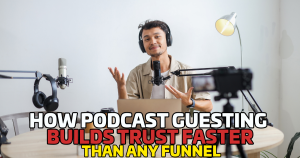
Most B2B companies are fighting over the same saturated channels — LinkedIn ads, cold email, conference sponsorships — while ignoring the one medium where their ideal buyers voluntarily spend 30 to 60 minutes consuming content. B2B podcast PR is the strategic discipline of placing company leaders as guests on podcasts that their target buyers already trust and listen to. It is not advertising. It is not content marketing in the traditional sense. It is earned media that positions your executives as the go-to authority in your category.
For B2B companies selling to other businesses — whether enterprise software, professional services, or industrial solutions — podcast PR offers something no other channel can: extended, uninterrupted access to a captive audience of decision-makers. This guide breaks down exactly how to build and execute a B2B podcast PR strategy that generates real pipeline, not just vanity metrics.
Why B2B Podcast PR Is Different From Consumer Podcast Marketing
Consumer podcast marketing typically means buying ad spots — host-read ads, pre-rolls, mid-rolls. That model works for direct-to-consumer brands selling mattresses or meal kits. It does not work for B2B companies with complex sales cycles, multiple stakeholders, and average deal sizes in the six or seven figures.
B2B podcast PR operates on a fundamentally different model. Instead of buying ad time, you earn interview time. Your CEO, founder, or subject matter expert appears as a guest on a podcast that your buyers already subscribe to. The host introduces them, validates their expertise through the interview format, and the audience receives your positioning as editorial content rather than advertising.
This distinction matters for three reasons. First, the trust transfer from host to guest is significantly stronger than any paid placement. When a respected podcast host invites someone onto their show, they are implicitly endorsing that person’s expertise. Second, the long-form format allows your executive to demonstrate depth of knowledge in a way that a 30-second ad spot or a 500-word LinkedIn post never could. Third, podcast audiences in B2B niches tend to be disproportionately senior. The VP of Engineering listening to a DevOps podcast during their commute is exactly the person your sales team is trying to get on a call.
The B2B Podcast PR Opportunity: What the Data Shows
The podcast landscape has matured significantly, and the data supports what early adopters already knew: B2B buyers are podcast listeners, and they act on what they hear.
Over 100 million Americans listen to podcasts monthly. Within the B2B segment, niche industry podcasts have smaller but far more concentrated audiences. A manufacturing podcast with 5,000 listeners per episode may reach more relevant decision-makers than a trade publication with 50,000 subscribers. The audience self-selects by choosing to listen, which means engagement is inherently higher than interruptive channels.
The compounding nature of podcast content is another factor B2B companies underestimate. A blog post may get traffic for a few weeks before it drops off. A podcast episode stays in the feed permanently. Listeners discover back-catalog episodes through search, recommendations, and binge-listening. A single strong guest appearance can generate inbound inquiries months or even years after the episode airs.
For companies selling high-consideration B2B products and services, this extended shelf life is particularly valuable. Your buyers are not making impulse purchases. They are researching, comparing, and building internal consensus over weeks or months. Being the voice they keep hearing across multiple trusted podcasts creates a familiarity advantage that is difficult to replicate through any other channel.
Building Your B2B Podcast PR Strategy: A Framework That Works
Effective B2B podcast PR requires more than sending mass pitches to every podcast with a submission form. It requires a strategic framework built around your ideal customer profile, your executive’s areas of authority, and a clear understanding of which shows actually reach the people you need to influence.
Step 1: Define Your Podcast-Market Fit
Start by mapping your ideal customer profile to the podcast ecosystem. Ask these questions: What podcasts do your best customers listen to? What industry publications have podcasts? What topics does your target buyer care about that your executive can speak to with genuine authority?
The goal is not to appear on the biggest podcasts. The goal is to appear on the right podcasts — the ones where your target buyer is the primary audience. A niche podcast about supply chain technology with 2,000 listeners who are all logistics VPs is worth more than a general business podcast with 200,000 listeners who are mostly aspiring entrepreneurs.
Build a target list organized by tiers. Tier 1 consists of the industry-specific podcasts your buyers definitely listen to. Tier 2 includes adjacent-category podcasts where your expertise is relevant but the audience is broader. Tier 3 covers general business and leadership shows that offer credibility and reach but less direct buyer overlap.
Step 2: Develop Your Executive’s Narrative Architecture
The most common mistake in B2B podcast PR is treating every appearance as a product pitch. Podcast hosts do not want to interview someone about their software features. They want guests who can deliver insight, provoke thought, and give their audience something they cannot get anywhere else.
Build a narrative architecture for your executive that includes three to five core topics they can speak to with depth and originality. These topics should sit at the intersection of your company’s expertise and your audience’s pain points, but they should be framed as category-level insights rather than product-level pitches.
For example, if your company sells cybersecurity software to enterprises, your CEO’s podcast narrative should not be about your product’s threat detection capabilities. It should be about why the enterprise security model is fundamentally broken, what the CISO’s role needs to become, or how board-level security governance is evolving. These topics naturally lead listeners to explore your company without making the interview feel like a sales call.
Step 3: Execute Targeted Podcast Outreach
Podcast outreach is a discipline, not a mass email campaign. Every pitch should be customized to the specific show, reference recent episodes, and clearly articulate why your executive would deliver a compelling interview for that specific audience.
The pitch should lead with the topic and the value to the audience, not with your executive’s credentials or your company’s achievements. Podcast hosts receive dozens of pitches weekly. The ones that get booked are the ones that answer the host’s fundamental question: will this person make a great episode that my listeners will love?
Include a one-sheet that covers your executive’s bio, three to five suggested topics with brief descriptions, notable previous podcast appearances if any, and links to any existing content that demonstrates their speaking ability. Make it as easy as possible for the host to say yes.
Step 4: Prepare for Maximum Impact Per Appearance
Every podcast appearance should be treated as a strategic opportunity, not a casual conversation. Preparation is what separates executives who generate pipeline from podcast PR and those who generate nothing.
Before each recording, research the show thoroughly. Listen to at least three recent episodes. Understand the host’s style, the typical episode structure, and what the audience responds to. Prepare specific stories, data points, and frameworks that align with the agreed-upon topic. Have a clear call to action — not a hard sell, but a natural next step like a relevant resource, a framework they can download, or an invitation to continue the conversation.
The call to action is critical and often overlooked. You need to give interested listeners a reason and a mechanism to engage further. This should feel organic, not forced. Something like offering a specific resource that goes deeper on the topic you discussed is far more effective than saying “visit our website.”
Measuring B2B Podcast PR ROI: Beyond Download Numbers
One of the biggest objections to B2B podcast PR is the perception that it is difficult to measure. This objection is valid if you are trying to measure it the same way you measure paid advertising. It requires a different measurement framework.
Direct Attribution Metrics
Track branded search volume increases correlated with episode air dates. Monitor direct traffic spikes to your website on the day and week episodes publish. Use unique URLs or landing pages in your podcast calls to action. Ask “how did you hear about us?” in every inbound inquiry form and sales conversation. Track increases in inbound demo requests and connect them to your podcast appearance schedule.
Influence and Authority Metrics
Monitor your executive’s social media following growth. Track speaking invitation increases. Measure media mention volume. Watch for organic backlinks generated from podcast show notes — these also carry significant SEO value. Track the number of qualified opportunities where a podcast appearance was mentioned as a touchpoint in the buyer’s journey.
Pipeline and Revenue Metrics
This is where B2B podcast PR proves its value. Work with your sales team to tag opportunities where podcast content was a contributing factor. Measure the average deal size and close rate of podcast-influenced deals versus non-podcast deals. In our experience at Command Your Brand, podcast-influenced deals tend to close faster because the buyer arrives with pre-built trust and a deeper understanding of your approach.
The key is to set up tracking before you start your podcast PR campaign, not after. Build the attribution mechanisms into your CRM from day one so you can measure impact accurately over time.
Common Mistakes That Undermine B2B Podcast PR Campaigns
After working with hundreds of executives and companies on podcast PR, certain patterns consistently separate successful campaigns from wasted efforts.
Treating podcast appearances as one-off events rather than a sustained campaign. One podcast episode will not transform your pipeline. A sustained presence across 15 to 25 relevant podcasts over six to twelve months will. B2B podcast PR is a compounding strategy, and companies that commit to a consistent cadence see dramatically better results than those who do a few episodes and stop.
Sending the wrong executive. Not every C-suite leader is suited for podcast guesting. The right person needs to be articulate, comfortable with long-form conversation, genuinely knowledgeable about the topics they are discussing, and capable of being engaging without being salesy. Sometimes the best podcast representative is not the CEO but a VP of Product or a Chief Revenue Officer who is closer to the problems your buyers face.
Neglecting post-episode amplification. The episode itself is just the starting point. Every appearance should be repurposed into LinkedIn posts, email content, blog summaries, audiogram clips for social media, and sales enablement material. A single podcast episode can generate weeks of content across multiple channels if you have a repurposing system in place.
Pitching product features instead of insights. Hosts will not invite you back, and their audience will not engage, if your executive spends 30 minutes talking about your platform. Lead with category insights, industry trends, and hard-won lessons. Let the expertise speak for itself and trust that interested listeners will research your company on their own.
Ignoring show notes and backlinks. Every podcast episode generates show notes with links back to your website. These backlinks from podcast hosting platforms carry SEO authority and drive referral traffic. Make sure you are providing hosts with the correct links and that your landing pages are optimized for the traffic they will receive.
When to Bring In a Professional B2B Podcast PR Agency
Building and executing a B2B podcast PR campaign in-house is possible, but it requires significant time, relationships, and expertise that most B2B companies do not have internally. The research alone — identifying the right shows, understanding their audience demographics, tracking which hosts are actively seeking guests — is a substantial ongoing investment.
A professional podcast PR agency brings established relationships with podcast hosts, proven pitch frameworks, media training for executives, and the systems to manage a sustained campaign without pulling your marketing team away from their core responsibilities.
The decision to work with an agency typically comes down to three factors: the value of your executive’s time, the speed at which you need results, and the scale of the campaign you want to run. If your target is 20-plus podcast placements in the next year across specific industry verticals, an agency with existing host relationships and a track record of placing B2B executives will deliver results faster and more consistently than building the capability from scratch.
At Command Your Brand, we specialize in placing founders and executives on podcasts that their target buyers actually listen to. If you are ready to explore whether B2B podcast PR fits your growth strategy, visit our Work With Us page to start the conversation.
The Bottom Line on B2B Podcast PR
B2B podcast PR is not a trend. It is a fundamental shift in how B2B companies build authority, generate trust, and create pipeline. The companies that invest in this channel now — while their competitors are still fighting over the same oversaturated digital advertising channels — will own a compounding advantage that becomes increasingly difficult to replicate.
The path forward is clear: identify the podcasts your buyers listen to, develop narratives that deliver genuine value to those audiences, execute a sustained campaign, and measure results with the right attribution framework. Whether you build the capability in-house or partner with a specialized agency, the strategic value of getting your executives on the right podcasts is too significant to ignore.
Your buyers are already listening. The only question is whether they are hearing from you or from your competitors.